
Communication difficulties can affect confidence, education, work, and social interaction. Speech Therapy is a structured form of rehabilitation used for selected speech, voice, language, fluency, and swallowing-related difficulties. In ENT care, it may be particularly relevant when communication problems are connected with voice production or conditions affecting the throat and larynx.
The first step is understanding whether the problem is primarily related to speech production, voice, language, hearing, neurological function, or an anatomical condition.
Speech Problems and Voice Problems Are Different
Speech refers to the production and articulation of sounds used to form words. Voice refers to the sound generated when the vocal cords vibrate.
A person can therefore speak clearly but have a hoarse voice, while another person may have normal voice quality but difficulty producing certain speech sounds.
This distinction influences assessment and therapy.
When Can Therapy Be Considered
Depending on individual circumstances, therapy may be recommended for:
- Voice misuse
- Selected vocal cord conditions
- Voice rehabilitation after treatment
- Articulation difficulties
- Fluency concerns
- Communication problems associated with hearing impairment
- Selected swallowing difficulties
- Rehabilitation following certain neurological or surgical conditions
The exact treatment should be based on professional assessment.
Why ENT Examination May Come First
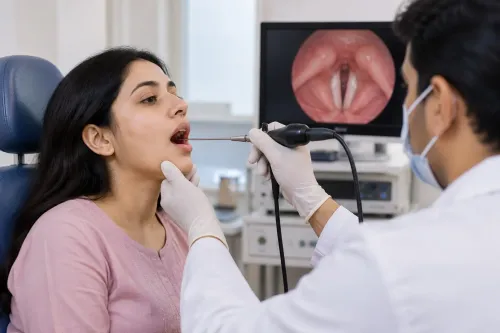
When someone develops persistent hoarseness or an unexplained voice change, simply practising voice exercises without examining the vocal cords may overlook an underlying problem.
An ENT specialist can evaluate the throat and larynx when medically appropriate. If a structural lesion, inflammation, vocal cord movement problem, or other condition is identified, treatment can be coordinated accordingly.
For patients in Pune, this combined approach can be particularly useful when a voice problem has persisted despite rest or basic measures.
What Happens During Therapy
Therapy is tailored to the diagnosis and functional goals.
Sessions may include exercises and techniques related to breathing, voice production, articulation, vocal efficiency, communication strategies, or swallowing, depending on the problem being treated.
Progress usually depends on consistent practice rather than the session alone.
How Long Does Recovery Take
There is no standard recovery period.
Some problems improve over a relatively short course of therapy, while longstanding or complex conditions may require continued rehabilitation.
Recovery after a surgical procedure involving the voice may also involve a planned period of rest followed by gradual rehabilitation.
Patients should avoid rushing back into heavy voice use without professional guidance.
Benefits and Limitations
Potential benefits include improved vocal efficiency, clearer communication, reduced strain, better use of available voice function, and development of healthier communication techniques.
Therapy cannot correct every structural or medical condition by itself. If an underlying problem requires medical or surgical management, rehabilitation may form only one part of the treatment plan.
Dr. Phadke’s ENT and Rhinoplasty Clinic in Pune can assess relevant ENT and voice conditions when determining whether further voice or speech rehabilitation is appropriate.
Frequently Asked Questions
Is speech therapy only for children
No. Adults may also need speech, voice, communication, or swallowing rehabilitation for many different reasons.
Can therapy help persistent hoarseness
Voice therapy can help selected voice disorders, but persistent hoarseness should first be appropriately evaluated to identify the cause.
Is surgery always required for vocal cord problems
No. Management depends on the diagnosis. Some conditions respond to voice modification, therapy, medical management, or observation, while others may require a procedure.
Can I practise exercises from the internet
Generic exercises may not address the actual cause of a voice or speech problem. Individual assessment helps ensure that exercises are appropriate.
Successful rehabilitation is built around the specific difficulty rather than a standard set of exercises. Accurate assessment, regular practice, and coordinated care can make the process more focused and clinically appropriate.
Keywords